Address
304 North Cardinal
St. Dorchester Center, MA 02124
Work Hours
Monday to Friday: 7AM - 7PM
Weekend: 10AM - 5PM
Address
304 North Cardinal
St. Dorchester Center, MA 02124
Work Hours
Monday to Friday: 7AM - 7PM
Weekend: 10AM - 5PM
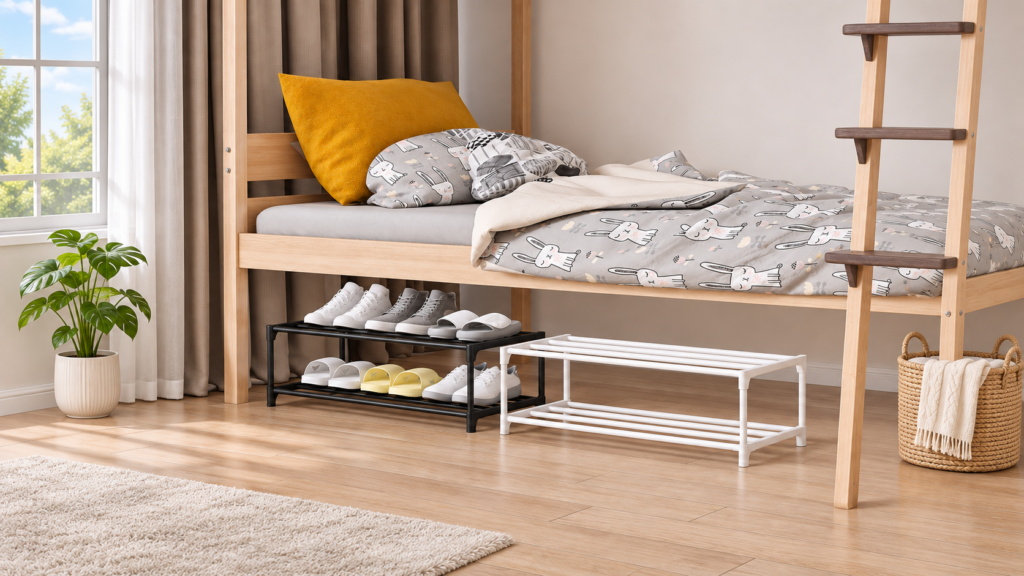
Choosing the right shoe storage solution can make a difference in how organized and functional your home feels. Open shoe racks and enclosed shoe cabinets each offer different layouts and storage features. Understanding their differences can help you find an option that suits your space and everyday habits.
Open shoe racks provide visible storage with shelves that make it easy to arrange and retrieve footwear.
They can be useful in entryways, bedrooms, and closets where convenient access is important.
Some features to consider include:
Open designs are worth considering if you prefer keeping your footwear visible and within reach.
Flip-down shoe cabinets use front-opening compartments to store footwear in a more enclosed layout.
Their vertical design can be suitable for narrow entryways and other areas where floor space is limited.
When considering this style, pay attention to:
These details can help you determine whether a flip-down cabinet fits your storage needs.
Some shoe storage designs combine open shelves with partially covered compartments.
This layout provides a balance between visible storage and more concealed organization.
You can use accessible shelves for frequently worn shoes while keeping other footwear arranged in covered sections.
Consider the number of compartments, shelf arrangement, and available storage space before choosing this style.
Before selecting a shoe storage design, measure the area where you plan to place it.
Consider the following locations:
Make sure the selected design allows enough room for comfortable movement and convenient access.
The best shoe storage option depends on how you use your space.
If you frequently change shoes throughout the day, an open rack may provide convenient access. If you prefer a more concealed arrangement, a shoe cabinet may be worth considering.
For households with different storage needs, a combination of open and covered compartments can also be a practical option.
Open shelves, flip-down cabinets, and partially covered storage designs each offer different ways to organize everyday footwear.
By comparing their dimensions, storage capacity, accessibility, and overall appearance, you can choose a solution that fits your home and daily routine.
At GREATSPACEONANCOCK, we appreciate practical home solutions that make everyday organization simpler and living spaces more comfortable.